You survived breast cancer. You did the surgery, the chemotherapy, the radiation, the years of endocrine therapy. You did everything that was asked of you. And now you cannot think clearly. Your joints ache. You cannot sleep. You have gained weight despite nothing changing. Your libido is gone. Your relationship is suffering. Sex is painful. You are having recurring urinary tract infections. You feel like a stranger in a body that used to be yours. And when you finally work up the courage to ask your oncologist about hormone therapy, the answer is no. Not a conversation. Not a review of your specific tumor type or treatment history or what you are actually experiencing. Just no. And then, if you push back, someone says something that will stay with you for a long time: be happy you are alive.
I want to talk to you directly, woman to woman and physician to patient, about why that answer is insufficient and what the evidence actually shows.
I will also tell you something from my own practice. I have patients who came to me after being told they could not start hormone therapy because of a history of breast cancer. After a thorough, individualized review of their specific situation, their tumor receptor status, their treatment history, their disease-free interval, and their current quality of life, some of those women have started bioidentical hormone therapy under my care. And they feel the best they have felt in years. That is not anecdote. It is clinical medicine applied to the individual rather than a policy applied to a category.
The voices that shaped my thinking on this
Three physicians working from completely different vantage points have arrived at the same conclusion on this question, and their convergence matters.
Dr. Avrum Bluming is a hematologist and medical oncologist, Emeritus Clinical Professor at the University of Southern California, a Master of the American College of Physicians, an honor held by fewer than 500 of the 100,000 board-certified internists in the United States, and a former senior investigator for the National Cancer Institute. He has spent decades specifically studying HRT in women with a history of breast cancer. His book Estrogen Matters is a comprehensive, rigorously sourced dismantling of the fear-based narrative around estrogen and breast cancer. He was so confident in his conclusions that he recommended HRT for his own wife after her breast cancer diagnosis and for his daughter, also a breast cancer survivor.
Dr. Jeffrey Dach's meticulous review of the peer-reviewed literature on bioidentical formulations, the French cohort data, and the clinical distinction between synthetic progestins and natural progesterone forms the scientific foundation of how I prescribe. I have written about his book Bioidentical Hormones 101(second edition ) at length on this site.
Dr. Jenn Simmons spent 17 years as Philadelphia's first fellowship-trained breast surgeon, serving as Chief of her department at Einstein Medical Center and Medical Director of their Cancer Program, before leaving conventional medicine to found Real Health MD, an integrative oncology practice dedicated to helping breast cancer survivors truly heal. She has operated on more breast cancer patients than most physicians will ever see in a career. She says, without qualification, that women treated for breast cancer should have access to bioidentical hormone replacement. She has also spoken and collaborated directly with Dr. Dach on this topic in a two-part episode of her podcast Keeping Abreast with Dr. Jenn. When a fellowship-trained breast surgeon and a physician who has spent two decades reviewing the biochemical literature are arriving at the same conclusions and then sitting down together to discuss them, that is not a fringe position. That is a convergence of expertise the mainstream has not yet caught up to.
You deserve to know what they know.
Estrogen is not the enemy. The evidence says the opposite.
Dr. Simmons puts it plainly: any anti-estrogen talk is misogynistic. Estrogen is the hormone of life. We have estrogen receptors throughout every system in the body because estrogen is essential, not because it is dangerous. And she makes a point that completely reframes how many women understand their own diagnosis: when a breast cancer tumor tests positive for estrogen receptors, that is not evidence that estrogen caused the cancer. It is actually evidence of a more favorable prognosis, because receptor-positive tumors more closely resemble normal tissue. The presence of estrogen receptors is a marker of differentiation, not causation. This distinction is almost never communicated to patients, and it changes everything about how they understand their situation.
What the Women's Health Initiative data actually shows when you read all of it
The 2002 WHI study had two arms, and almost no one outside specialist circles knows what the second one found. The arm that made headlines tested estrogen combined with medroxyprogesterone acetate, a synthetic progestin, and was stopped early because of an apparent increase in breast cancer incidence. That finding drove two decades of unnecessary fear. But the second arm of the WHI tested estrogen alone in women who had undergone hysterectomy, and it told a completely different story. After more than 20 years of cumulative followup, the estrogen-alone arm showed a statistically significant 22 percent reduction in breast cancer incidence and a 40 percent reduction in breast cancer mortality compared to placebo. Estrogen, taken without a synthetic progestin, was associated with women getting breast cancer less often and dying from it less often.
The real culprit was never estrogen. It was the synthetic progestin.
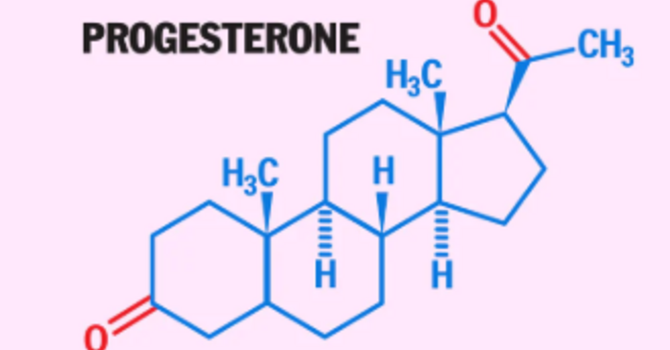
The WHI arm that showed increased breast cancer incidence used medroxyprogesterone acetate, a synthetic progestin. Not bioidentical progesterone. These molecules are not interchangeable and do not behave the same way in breast tissue. Dr. Dach draws extensively on the landmark 2008 French E3N cohort study by Dr. Agnes Fournier, which followed nearly 100,000 women and found that women using estrogen combined with synthetic progestins showed elevated breast cancer risk, while women using estrogen combined with natural progesterone did not. Dr. Fournier's conclusion was unambiguous: natural progesterone is preferable.
A Mayo Clinic-led systematic review and meta-analysis confirmed that bioidentical progesterone was associated with a 33 percent lower breast cancer risk than synthetic progestins. A 2022 population-based study found that micronized progesterone had an odds ratio of 0.99 for breast cancer, meaning no meaningful association with increased risk, while synthetic progestins showed an odds ratio of 1.28. The elevated breast cancer risk seen with combined HRT is predominantly mediated through formulations containing synthetic progestins, not bioidentical progesterone. Applying findings from synthetic progestin studies to a bioidentical protocol is not scientifically valid.
What the observational data on recurrence actually shows
Here is what most women with breast cancer history have never been told about recurrence rates. A large cohort study published in the Journal of the National Cancer Institute from the Fred Hutchinson Cancer Research Center followed 2,755 women with invasive breast cancer and found that those who used HRT after their diagnosis had a recurrence rate of 17 per 1,000 person-years, compared to 30 per 1,000 in women who did not use HRT. Breast cancer mortality was five per 1,000 person-years in HRT users compared to 15 per 1,000 in nonusers. The adjusted relative risk for recurrence was 0.50, meaning HRT users had half the recurrence rate of nonusers. The conclusion of the study was direct: HRT after breast cancer has no adverse impact on recurrence and mortality.
A separate Australian cohort study published in the Medical Journal of Australia, following 1,122 women with breast cancer over up to 36 years, found that HRT users had a 38 percent reduced risk of cancer recurrence, a 66 percent reduced risk of all-cause mortality, and a 60 percent reduced risk of death from the primary tumor compared to nonusers.
These are observational studies, not randomized controlled trials, and I am not presenting them as definitive proof that HRT prevents recurrence. What they show, consistently across multiple independent cohorts, is that the reflexive assumption that HRT accelerates recurrence in breast cancer survivors is not supported by the observational evidence. The picture is genuinely more complex and, in many analyses, more favorable than what women are told.
When recurrence does occur in HRT users, it tends to be less aggressive
There is another finding in this literature that deserves far more attention than it receives. The 1997 Collaborative Group on Hormonal Factors in Breast Cancer, which brought together data from 51 epidemiological studies involving more than 52,000 women with breast cancer across 21 countries, found that cancers diagnosed in women who had ever used HRT tended to be less clinically advanced than those diagnosed in never-users. A study from M.D. Anderson Cancer Center published in the Journal of Clinical Oncology found that HRT users who developed breast cancer recurrence with hormone receptor-positive disease had significantly better outcomes than non-users who developed the same receptor-positive recurrence, with the authors concluding that the biology of the tumor in HRT users differs from that in nonusers.
What this means is that even in the scenario where a recurrence does occur in a woman using HRT, the evidence suggests it is more likely to be a less aggressive, more treatable form of the disease. That is not a guarantee. But it is a clinically meaningful piece of information that belongs in every honest conversation about the risks and benefits of hormone therapy after breast cancer.
The untreated suffering is also a clinical risk
The conversation that almost never happens is the honest accounting of what untreated estrogen deprivation costs a breast cancer survivor. Severe vasomotor symptoms destroy sleep, which impairs immune function, cardiovascular health, and cognitive performance. Bone density loss accelerates, and breast cancer survivors are already at elevated fracture risk from years of aromatase inhibitor use. Cognitive decline compounds. Genitourinary atrophy worsens. And critically, the severity of menopausal side effects is one of the primary reasons women discontinue adjuvant endocrine therapy early, which directly compromises the cancer outcomes that treatment is meant to protect. The risk calculation must honestly weigh the documented harms of untreated estrogen deprivation against the actual, formulation-specific risk profile of a bioidentical protocol.
What you actually deserve
You deserve a conversation that includes your specific tumor receptor status, your treatment history, how long you have been disease-free, the severity of what you are experiencing, what nonhormonal alternatives have already been tried, and whether the clinicians involved are willing to think about your specific situation rather than apply a policy. That is how medicine should be practiced when the stakes are this high.
But I will not tell a woman who has survived, who is suffering, and who is doing everything right, that the evidence requires her to simply endure it. It does not. The physicians who shaped my thinking on this topic, Dr. Bluming, Dr. Dach, and Dr. Simmons, have spent their careers making exactly this case. The data they are citing is real, peer-reviewed, and sitting in PubMed waiting for your physicians to read it.
You deserve a clinician who has.
Dr. Anat Sapan, MD, is a board-certified OB-GYN and menopause specialist practicing telemedicine in California, Florida, New York, and Illinois. Book a complimentary discovery call.

Anat Sapan MD
Contact Me