You went to your doctor. You described what has been happening to you for months, maybe years. The exhaustion that sleep does not fix. The brain fog that makes you feel like you are thinking through wet concrete. The anxiety that arrived out of nowhere. The weight that appeared despite nothing changing. The version of yourself that you can no longer quite find. And your doctor ran some labs, looked at the results, and told you everything was normal.
That conversation is the reason so many women end up in my practice.
Here is what I want you to understand: your labs being normal does not mean your hormones are normal. In perimenopause, standard hormone testing is genuinely, structurally inadequate for the biology it is trying to measure. This is not a matter of opinion. It is a matter of how perimenopause actually works.
Why a single blood test cannot diagnose perimenopause
The most commonly ordered hormone tests are FSH and estradiol. Your doctor draws blood on one day, gets a number, compares it to a reference range, and reports whether you fall inside or outside that range. This works reasonably well for stable biological systems. Perimenopause is not a stable biological system.
During the perimenopausal transition, estradiol does not decline in a smooth, predictable line. It fluctuates wildly and erratically, not just day to day but hour to hour. You can draw blood in the morning and get one reading, draw it again that afternoon and get something dramatically different. Sometimes levels spike significantly higher than what was normal in your reproductive years before crashing within the same week. The NIH StatPearls clinical database confirms that estradiol concentrations during perimenopause can average 20 to 30 percent higher than levels in premenopausal women, even while a woman is experiencing severe symptoms. A single blood draw on a high hour of a high day will look completely normal. That same woman tested two days later may tell an entirely different story.
Research from the Swiss Perimenopause Study found that perimenopausal hormone levels do not follow a continuous decline but instead move through unpredictable swings with no consistent pattern from woman to woman or even from month to month in the same woman. A separate peer-reviewed analysis published in Frontiers in Psychiatry documented that estradiol variability, not just low estradiol levels, is independently associated with mood disruption, anxiety, and depressive symptoms, meaning the instability itself is the problem, not simply the direction of the change.
This is why a single normal lab result is not a verdict. It is a photograph taken at one moment of a story that spans years.
FSH is not the answer either
FSH, or follicle-stimulating hormone, is often tested as a marker of ovarian reserve. The idea is that as the ovaries begin to struggle, the pituitary gland produces more FSH to stimulate them, so elevated FSH is meant to suggest menopause. This reasoning is sound for confirmed menopause, but during perimenopause, FSH fluctuates just as erratically as estradiol does, sometimes dramatically from cycle to cycle and even within the same cycle. A normal or low FSH does not rule out perimenopause. It simply means you caught FSH on a good day, at a good hour.
The NIH states plainly that substantial hormonal variability during the menopausal transition limits the routine diagnostic value of FSH and estradiol testing. That sentence comes directly from their clinical reference database. And yet women are told every day, in exam rooms across this country, that their FSH is normal and therefore their symptoms must have another cause.
Estrogen is only part of the picture — progesterone and testosterone matter just as much
Most standard hormone panels, when they are even ordered, check estradiol and FSH and stop there. This misses two of the most clinically important hormones in a woman's perimenopausal experience: progesterone and testosterone.
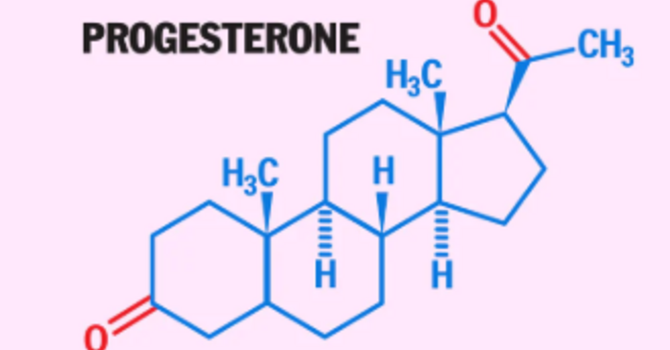
Progesterone is almost always the first hormone to decline, often years before estrogen becomes an issue. It falls because of anovulation, when the ovaries begin skipping ovulation more frequently even while periods continue to come. Without ovulation there is no corpus luteum, and without a corpus luteum there is no progesterone. The clinical consequences are real and specific: disrupted sleep, heightened anxiety, irregular and often heavier periods, and a pervasive sense of being wired and exhausted at the same time. A woman can have completely normal estradiol levels and be suffering significantly from progesterone deficiency, and a standard hormone panel will show nothing unusual at all.
Testosterone is equally invisible in standard care. Most physicians do not test it in women, and most women are never told that their testosterone has been declining steadily since their mid-twenties and drops sharply around menopause. Testosterone governs libido, yes, but also motivation, cognitive sharpness, muscle integrity, energy, and the fundamental sense of vitality that so many perimenopausal women describe losing. When it goes untested and untreated, those symptoms get attributed to depression, burnout, relationship problems, or simply aging.
A complete hormonal evaluation needs to include estradiol, estrone, progesterone, testosterone, DHEA, and thyroid function at minimum. Anything less is an incomplete picture, and an incomplete picture leads to incomplete care.
Labs are ranges. Ranges are not you.
Here is something that gets almost no attention in standard medical education: lab reference ranges are population statistics, not individual targets. A "normal" estradiol range is derived by averaging values across a large population of women. It tells you where most women fall. It does not tell you where you, specifically, need to be in order to feel well.
I see this play out in both directions every week in my practice. I have patients whose hormone levels are technically within the normal range on paper and who are suffering significantly. I have others whose levels look low by the reference range and who feel completely fine. The lab value and the lived experience do not always match, because the lab value does not know your individual hormonal baseline. It does not know what levels you were thriving at in your thirties. It cannot measure how your specific receptors are responding to the hormone levels you currently have.
This is why how you feel is the most predictive and most clinically honest guide to where your hormones actually are. Labs are tools, not verdicts. A number that falls inside a population reference range while you feel like a completely different person is not a clean bill of health. It is a data point that needs to be interpreted alongside the full clinical picture of what you are experiencing.
There are more than 150 recognized symptoms of perimenopause and menopause
Most people, including most physicians, think of menopause as hot flashes and missed periods. The reality is far broader. A comprehensive review published in Nature Reviews Endocrinology documented the full systemic reach of hormonal symptoms across perimenopause and menopause, spanning the central nervous system, the cardiovascular system, the metabolic system, the musculoskeletal system, the urogenital system, and the skin. Estrogen, progesterone, and testosterone receptors are distributed throughout every one of these systems, which is why their fluctuation and decline produces effects that go far beyond the reproductive organs.
Joint pain that appeared out of nowhere. Burning mouth. Heart palpitations. Itching skin. Tinnitus. Frozen shoulder. Recurring urinary tract infections. Changes in vision. Sensations that feel like electric shocks under the skin. These are not random complaints. They are documented hormonal symptoms that routinely go unrecognized because they do not match the narrow picture of menopause most doctors were trained to see. When a woman walks into a clinic with joint pain and brain fog and sleep disruption and is sent to rheumatology, neurology, and a sleep specialist without anyone connecting those symptoms to her hormonal status, that is what a missed diagnosis looks like in practice.
If you have been told your labs are normal and you still feel nothing like yourself, please hear this clearly: a normal lab result in the context of your symptoms means the test was insufficient, not that you are imagining things. Your symptoms are real. The hormonal biology behind them is real. The dismissal you received was not evidence-based medicine. It was the consequence of a diagnostic tool being applied to a biological situation it was not designed to capture, by a physician who may never have been taught how wide the landscape of hormonal decline actually is.
You deserve a clinician who will look at the whole picture, not just the number on a lab report.
Dr. Anat Sapan, MD, is a board-certified OB-GYN and menopause specialist practicing telemedicine in California, Florida, New York, and Illinois.

Anat Sapan MD
Contact Me