You are still getting your period, so you assume this is not that. But you are exhausted in a way sleep does not fix. You are crying at things that would not have touched you two years ago, or snapping at your kids and not recognizing your own voice. The scale will not move no matter what you change. You walk into a room and forget why. You have asked yourself, more than once, whether you are losing your mind. You are not. What you are describing is perimenopause, and it is one of the most under-recognized transitions in medicine, mostly because it does not look the way anyone told you it would.
What Is Perimenopause, And How Is It Different From Menopause?
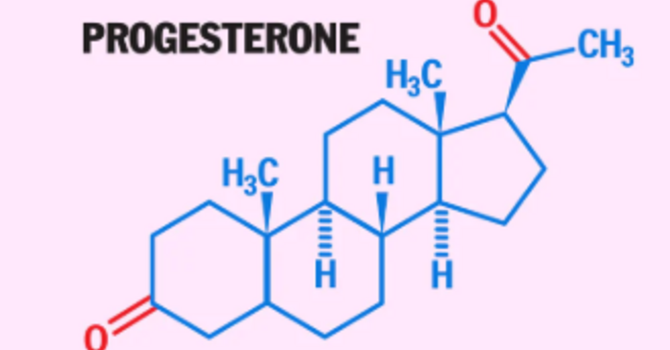
Perimenopause is the hormonal transition leading up to menopause, and it can last anywhere from a few years to over a decade. Menopause itself is a single point in time, diagnosed retrospectively once you have gone twelve consecutive months without a period, typically around age 51 in the United States. Perimenopause is everything that happens before that point, and it is where almost all of the chaos lives. During this phase, progesterone is usually the first hormone to decline, often years before estrogen does anything predictable. Estrogen does not simply fall in a smooth line. It surges and crashes, sometimes within the same month, which is the actual mechanism behind why your symptoms can feel erratic and contradictory rather than steady. This is also why perimenopause often feels more disruptive than menopause itself. Menopause is the arrival. Perimenopause is the turbulence on the way there.
How Do You Know If You Are In Perimenopause?
The most common sign is a change in your menstrual cycle, not its disappearance. Cycles that were once predictable start running shorter, longer, heavier, lighter, or less regular. This is the detail most women, and unfortunately some doctors, get wrong. You do not need to have stopped having periods to be in perimenopause. In fact, irregular but present periods alongside new symptoms, hot flashes, sleep disruption, mood changes, is the textbook presentation. If you have been told you cannot be in perimenopause because you are still cycling, that is incorrect, and it is one of the more common reasons women spend years without an explanation for what they are feeling.
What Age Does Perimenopause Start?
For most women, perimenopause begins sometime in their early-to-mid 40s, though it can start as early as the mid-30s. The average length of the transition is around four to eight years, though it varies significantly between individuals. If you are 38 or 39 and your cycles or symptoms have started shifting, you are not too young for this to be the explanation, and you deserve to have it taken seriously rather than dismissed because of your age.
Why Are You So Exhausted, Even When You Sleep?
Progesterone has a natural calming, sedating effect on your nervous system, acting on the same GABA receptors that anti-anxiety medications target. As progesterone declines, that built-in support disappears, which is part of why fatigue in perimenopause does not respond to simply sleeping more. The other piece is autonomic nervous system dysregulation. The same hormonal shifts driving hot flashes also destabilize the balance between your sympathetic and parasympathetic nervous systems, which shows up as a kind of tired that rest does not touch, because the issue is not how much you are sleeping. It is what your nervous system is doing while you sleep.
Why Can You Not Sleep Anymore?
Hot flashes and night sweats are an obvious driver, but they are not the only one. Even women who do not consciously feel hot are often waking from thermoregulatory disruption they do not remember the next morning. Falling progesterone removes its sedating effect at night specifically, which is why disrupted sleep is frequently one of the very first perimenopausal symptoms to show up, often before hot flashes do. This is its own deep topic, and I have written a full breakdown of the three drivers of midlife insomnia and what actually helps if you want to go further into it.
Why Will The Scale Not Move No Matter What You Do?
This is one of the most frustrating and least explained parts of perimenopause. As estrogen fluctuates, your body becomes more insulin resistant and tends to redistribute fat toward the abdomen, even without a change in diet or activity. The same Greendale-led SWAN cohort that tracked cognitive changes also tracked body composition over the transition, and found that the rate of fat gain roughly doubles and lean muscle mass starts declining specifically around the menopause transition itself, independent of chronological aging, then both level off again about two years after your final period. Cortisol, which tends to run higher during this transition due to autonomic dysregulation, compounds this by promoting further abdominal fat storage. This means the math that used to work, eat less, move more, stops producing the same results, not because you are doing something wrong, but because the hormonal environment driving fat storage has changed underneath you.
Why Does Your Brain Feel Different?
Estrogen plays a direct role in dopamine and acetylcholine activity in the prefrontal cortex and hippocampus, the regions responsible for working memory, verbal recall, and executive function. Greendale and colleagues, publishing in Neurology in 2009, followed women through the menopause transition and found that processing speed and working memory measurably dipped during the late perimenopausal stage specifically, then improved again after the final period. In other words, this is not in your head, and it is not permanent. It is a real, temporary, mechanistically explainable dip tied to a specific window of hormonal instability.
Why Are You Crying, Snapping, Or Feeling Rage You Cannot Explain?
Estrogen and progesterone both have direct effects on serotonin and GABA, the same neurochemical systems targeted by antidepressants and anti-anxiety medications. When these hormones are fluctuating unpredictably rather than declining smoothly, mood regulation becomes unpredictable along with them. Cohen and colleagues, in the Harvard Study of Moods and Cycles published in Archives of General Psychiatry in 2006, followed 460 women with no lifetime history of depression and found a significantly elevated risk of a first depressive episode specifically during the transition into perimenopause. This affects women with no prior history of anxiety or depression, which is part of why it catches so many women off guard. It is not a personality change and it is not a character flaw. It is your neurochemistry responding to a hormonal environment that is genuinely unstable right now.
How Long Does This Actually Last?
Perimenopause lasts four to eight years on average, though some women move through it in under two and others experience it for closer to a decade. It ends at menopause, the twelve-month mark without a period, after which your hormone levels stabilize into a new, consistently lower baseline. The instability is the defining feature of perimenopause specifically. It is not how the rest of your life is going to feel.
What Actually Helps
In my practice, the women who get the most relief are the ones who stop trying to treat each symptom separately, the sleep with one thing, the mood with another, the weight with a third, and instead address the hormonal instability driving all of it. Restoring progesterone is often the first and fastest relief, particularly for sleep and anxiety. Stabilizing estrogen, rather than just replacing it, addresses the hot flashes, the cognitive symptoms, and a meaningful part of the metabolic shift. This is not about pushing hormones on every woman regardless of her situation. It is about giving you an accurate explanation for what your body is doing, so that you and your provider can make an informed decision about what to do next.
Frequently Asked Questions
Can I be in perimenopause if I am still getting regular periods? Yes. Irregular timing is more common than regular cycles disappearing, but some women remain fairly regular for a while even as other symptoms begin. Cycle change is a strong signal, not a requirement.
Is 35 or 38 too young for perimenopause? No. While the average start is the early-to-mid 40s, it is well documented to begin in the mid-30s for a meaningful number of women.
Will my brain fog and forgetfulness go away? For most women, yes. The cognitive dip documented in perimenopause research is tied to the late transition specifically and tends to improve once hormone levels stabilize after menopause.
Is it normal to suddenly feel anxious or emotional with no clear trigger? Yes, and it does not require a prior history of anxiety or depression to happen. It is a direct result of estrogen and progesterone's effects on mood-regulating neurochemistry.
How do I know if what I am feeling is perimenopause or something else? The most reliable way is a combination of your symptom pattern, your age, and lab work that looks at your full hormonal picture rather than a single snapshot value. This is exactly the kind of evaluation worth having with a provider who specializes in this transition specifically.
If what you just read sounds like your life right now, you do not need to keep guessing at it alone. Book a complimentary discovery call at doctoranat.com. No pressure, no commitment. Just a real conversation about what is actually happening in your body and what your options are.
Book your complimentary discovery call at doctoranat.com
Dr. Anat Sapan is a board-certified OB-GYN and menopause specialist, exclusively focused on personalized bioidentical hormone therapy for women in their 40s, 50s, 60s, and beyond. She serves patients via telemedicine in California, Florida, New York, and Illinois.

Anat Sapan MD
Contact Me