Women come to my practice for different reasons.
Some are already on hormone therapy but not getting complete symptom relief. They are still waking at 3am, still foggy at work, still not themselves, and they want to understand why. Some have been dismissed by their doctors, handed an antidepressant when they asked about their hormones, or told their labs are normal when they feel anything but. And some come specifically because clean ingredients already matter to them. They read labels. They buy organic. They question what goes into their food, their supplements, their skincare. And at some point it occurs to them: I have never once looked at what is inside my hormone prescription.
This post is for that woman. Though I suspect every woman reading it will recognize herself somewhere in it.
The Moment That Changed How I Practice
I am a board-certified OB-GYN with over twenty years of clinical experience prescribing medications. And I had never once read the full ingredient list of any medication I was prescribing. I knew what the active ingredient was. I never felt the need to look further, because I assumed that if something was FDA-regulated, the full contents had been examined and deemed safe.
That assumption held until I developed a reaction to the adhesive on a transdermal estrogen patch I was wearing myself.
The reaction pushed me to seek answers. I wanted to understand hormones more deeply, not just as a prescriber but as a patient. That search led me to Dr. Daved Rosensweet MD at the Institute of Bioidentical Medicine, and it was there that I was first asked to look, really look, at what was inside the products I had been prescribing for years.
I went to the FDA prescribing information, publicly available on the FDA website, and read the full ingredient lists of the patches, the pills, and the gels I had been recommending to women for two decades.
I was shocked. Not because the ingredients were secret. They are not. They are printed in the official prescribing documentation that accompanies every FDA-approved medication. I was shocked because I, a physician with over twenty years of prescribing experience, had never looked. And because what I found there had no therapeutic purpose whatsoever. The adhesive chemicals, the synthetic dyes, the petroleum-derived compounds were there for manufacturing convenience, shelf stability, and color-coding dose strengths.
That is when I understood why I had reacted to the patch. I was not reacting to the estradiol. I was reacting to what was holding it to my skin.
I suspect most physicians have never looked at these lists either. Not because they do not care, but because the same assumption I carried for twenty years is one that most of us were trained to hold: FDA-regulated means safe, and safe means we do not need to ask what else is in there.
Your doctor almost certainly does not know what is in the inactive ingredients of the prescription they just handed you. Neither did I.
What Is Actually Inside Your Hormone Prescription
The following information comes directly from FDA-approved prescribing documentation. These ingredient lists are not hidden. They are simply never discussed.
Transdermal estrogen patches
Vivelle-Dot, Climara, Minivelle, Alora, and Lyllana all contain bioidentical estradiol, which is the correct hormone. But the estradiol is delivered through an adhesive matrix containing acrylic adhesive, silicone adhesive, oleyl alcohol, povidone, and dipropylene glycol. The backing layer is made of polyolefin or polyester film. This adhesive is in direct contact with your skin, sealed against it, for days at a time.
Skin reactions to hormone patches are among the most common reasons women stop therapy. Those reactions are almost always attributed to estrogen sensitivity. In many cases, the estradiol is not the problem. The adhesive is.
Transdermal estrogen gels
EstroGel, Elestrin, and Divigel contain bioidentical estradiol in an alcohol-based or hydroalcoholic base. Inactive ingredients include purified water, alcohol, triethanolamine, carbomer, and propylene glycol.
Propylene glycol is documented in peer-reviewed dermatology literature as a weak allergen with the potential to cause irritant and allergic contact dermatitis, particularly in individuals with pre-existing skin sensitivity or a compromised skin barrier. For a woman applying this to her skin every morning for years, that is worth knowing.
Prometrium
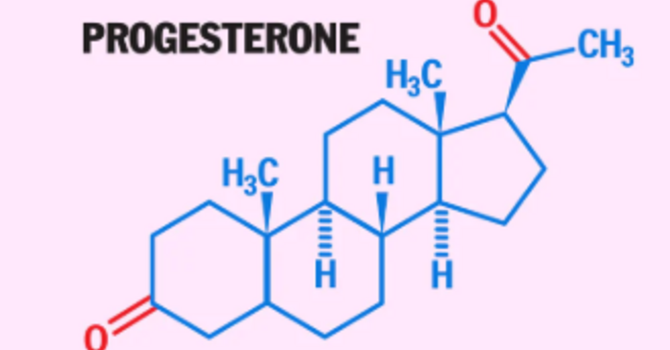
Prometrium contains bioidentical micronized progesterone, which is the right hormone. It is suspended in peanut oil. The full inactive ingredient list includes peanut oil, gelatin, glycerin, lecithin, titanium dioxide, D&C Yellow No. 10, and FD&C Red No. 40.
Women who have been told they cannot tolerate progesterone deserve a closer look at this. Peanut sensitivities exist on a spectrum. A mild or subclinical sensitivity that was never formally diagnosed may have contributed to reactions that were attributed to the progesterone itself. The hormone may have been fine. The carrier may not have been.
Bijuva, Estrace, and combination products
Bijuva, the combination estradiol and progesterone capsule, contains among its inactive ingredients FD&C Red No. 40, propylene glycol, polyethylene glycol, polyvinyl acetate phthalate, and isopropyl alcohol, along with a lengthy list of additional excipients.
Estrace, an oral bioidentical estradiol tablet, contains acacia, lactose, corn starch, talc, and colloidal silicon dioxide, with synthetic dyes added depending on dose strength, including FD&C Blue No. 1 and FD&C Yellow No. 5, also known as tartrazine.
In every case, the dyes serve one purpose: telling you which dose strength you are holding. They have no therapeutic function.
A brief note on conjugated equine estrogens
Some women are still being prescribed conjugated estrogens derived from pregnant mares' urine. If you are one of them, I would encourage a direct conversation with your provider. This hormone is not structurally identical to the estrogens your body produces. In 2026, with cleaner and more clinically appropriate options available, I would be concerned to see any patient still on this.
The Synthetic Dye Problem
Synthetic colorants appear throughout these products. FD&C Red No. 40, FD&C Blue No. 1, FD&C Yellow No. 5 (tartrazine), D&C Yellow No. 10, D&C Red No. 27, and others are used exclusively to distinguish dose strengths visually. They have no therapeutic purpose.
In January 2025, the FDA banned Red Dye No. 3 from all food and pharmaceutical products after research demonstrated it disrupts thyroid hormone regulation, specifically by blocking the thyroid's ability to absorb iodine and interfering with an enzyme essential for converting thyroid hormones. Pharmaceutical manufacturers must comply by January 2028. Red Dye No. 3 is not present in the hormone therapy products reviewed here, but the broader pattern is telling. It took over 35 years from the initial evidence of harm to the eventual ban. The dyes that are present in today's hormone therapy products have not received anything like the scrutiny they deserve, particularly for women applying or ingesting them daily over many years.
For women who already question what goes into their body, the presence of petroleum-derived colorants in a medication taken daily for years is a reasonable thing to know and think about.
Why I Use HRT Compounded in 100% Organic Jojoba Oil
When I formulate hormones for my patients, including BiEst (estriol and estradiol), progesterone, testosterone, and DHEA, I compound them in 100% certified organic jojoba oil. No synthetic dyes. No propylene glycol. No acrylic adhesives. No peanut oil. No petroleum-derived colorants. No fillers, binders, or synthetic preservatives of any kind.
This is a clinical decision, not a marketing one.
Jojoba oil is technically a liquid wax ester, not an oil. Its molecular structure closely resembles human sebum, the natural oil your skin produces. Because of this similarity, it integrates with your skin's natural lipid layer rather than disrupting it. It does not require chemical penetration enhancers to move through the skin. It supports absorption naturally and delivers the hormone steadily.
Estradiol, estriol, progesterone, and testosterone are all lipophilic. They are fat-soluble hormones, designed to move through lipid environments. An organic oil carrier works with the chemistry of these hormones in a way that a hydroalcoholic gel or an acrylic adhesive matrix simply does not.
For women who already understand that the quality of what you put into your body matters, this is not a surprising idea. It is the same logic applied to medicine that you already apply to food.
What This Means if You Are Currently on Hormone Therapy and Not Feeling Well
If you are on a patch and your skin reacts, you may not be estrogen-sensitive. You may be reacting to the adhesive.
If you tried Prometrium and felt poorly, you may not be progesterone-intolerant. You may be reacting to peanut oil.
If an estradiol gel irritated your skin or caused unexplained reactions, you may be reacting to the propylene glycol or the alcohol base rather than the hormone itself.
If you are on hormone therapy and your symptoms are not fully resolved, it may be the protocol: the wrong combination of hormones, the wrong dose, or insufficient follow-up. But it may also be the carrier. Both deserve a real conversation.
This is the conversation almost no one is having with their patients. I have it with every patient I see.
If This Resonates With How You Already Think About Your Health
If you already read ingredient lists, choose organic when it matters, and ask questions most people do not think to ask, you already understand what I am describing. You have simply not yet applied that same standard to your hormone prescription.
If you are in California, Florida, New York, or Illinois and would like to have this conversation in depth, I offer complimentary discovery calls. We will look at what you are currently taking, what is inside it, and whether there is a cleaner, more complete approach that works better for your body.
Book your complimentary discovery call at doctoranat.com
Dr. Anat Sapan is a board-certified OB-GYN with over 20 years of clinical experience, specializing exclusively in bioidentical hormone therapy for women in perimenopause and menopause. She serves patients via telemedicine in California, Florida, New York, and Illinois. All ingredient information cited in this article is sourced directly from FDA-approved prescribing documentation.

Anat Sapan MD
Contact Me