Written by Anat Sapan, MD, board-certified OB-GYN · Published November 2026
If you are in your late 30s or 40s and suddenly getting your period twice a month, the most common reason is perimenopause: as ovulation becomes less reliable, cycles often get shorter before they get longer. But two bleeds in one month is also how polyps, fibroids, thyroid problems and, rarely, precancerous changes in the uterine lining can show up. So it is common, it is usually hormonal, and it still deserves a proper evaluation.
What Counts As Normal?
A normal cycle runs 24 to 38 days from the first day of one period to the first day of the next.[1] If your cycles are regularly shorter than 24 days, you can easily get two periods in a single calendar month. In early perimenopause, cycle length starts varying by seven days or more from one cycle to the next.[2]
Why Perimenopause Causes Two Periods A Month
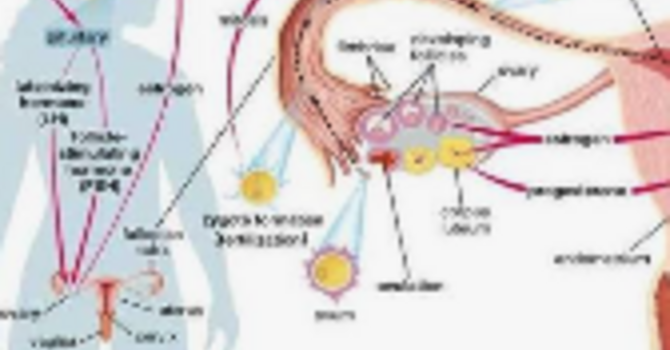
In perimenopause, ovulation becomes irregular, so progesterone, which is made after ovulation, becomes low or missing. Meanwhile estrogen swings and often runs higher than before.[3] Estrogen builds up the uterine lining and progesterone stabilizes it, so with too little progesterone the lining becomes unstable and sheds early and unpredictably. That is why short cycles, heavy periods and spotting between periods so often arrive together in your 40s. About one in four women has heavy bleeding during this transition.[3] I explain the full picture in you are not losing your mind, you are in perimenopause.
Other Causes To Rule Out
Gynecologists use a standard checklist for abnormal bleeding:[1]
- Polyps in the uterine lining or cervix
- Adenomyosis, when lining tissue grows into the uterine wall
- Fibroids
- Endometrial hyperplasia or cancer, an overgrowth of the lining that becomes more likely with age and unopposed estrogen
- Bleeding disorders, such as von Willebrand disease
- Ovulation problems from perimenopause, thyroid disease, PCOS or stress
- Medications, including blood thinners and some hormones
- Pregnancy or a pregnancy complication. Yes, you can still get pregnant in perimenopause.
When To See A Doctor
See your doctor if you have any of these:
- Cycles shorter than 24 days more than once or twice
- Bleeding between periods or after sex
- Soaking through a pad or tampon every hour or two, or passing clots larger than a quarter
- Periods lasting more than eight days
- Feeling exhausted, short of breath or dizzy, which can mean iron deficiency
- Any bleeding after you have gone 12 months without a period. That always needs evaluation.
For women 45 and older with abnormal bleeding, ACOG recommends sampling the uterine lining as a first-line test to rule out hyperplasia or cancer.[4]
How I Evaluate It
- A pregnancy test, always first
- Blood work: a complete blood count, ferritin (iron stores) and thyroid function
- A pelvic ultrasound to look for fibroids, polyps or a thickened lining
- An endometrial biopsy when age, ultrasound findings or bleeding pattern call for it
I always check iron. Heavy periods are one of the biggest causes of iron deficiency in women, and it is routinely missed because heavy bleeding gets treated as normal.[5] Low iron alone can cause fatigue, hair loss, poor sleep and brain fog.
How I Treat It
Once serious causes are ruled out, treatment targets the hormone imbalance behind the bleeding:
- Bioidentical progesterone. Restoring the progesterone that perimenopause takes away stabilizes the lining and often regulates cycles, and it improves sleep and anxiety at the same time.[3] I explain why it differs from synthetic progestins in progesterone is not a progestin.
- A levonorgestrel IUD such as Mirena. In a Cochrane review of 25 randomized trials, the hormonal IUD reduced menstrual blood loss more than oral medications.[6] It also provides reliable contraception. It is a synthetic progestin, but it works mostly inside the uterus and can be used together with bioidentical progesterone.
- Bioidentical hormone therapy. For women with hot flashes, sleep problems or mood changes alongside the bleeding, a personalized bioidentical plan treats the whole transition, not just the bleeding. See everything you need to know about bioidentical hormone therapy.
- Iron repletion if your iron stores are low, and treating the thyroid if it is part of the picture.
Frequently Asked Questions
Is it normal to get two periods in one month in your 40s? It is common, because cycles often shorten in early perimenopause. It is not something to ignore, especially if it keeps happening or the bleeding is heavy.
Can stress cause two periods in one month? Stress can disrupt ovulation and shift your cycle, but in your 40s the more common driver is the hormonal change of perimenopause.
Is it a period or spotting? A period is bleeding heavy enough to need a pad or tampon for several days. Light spotting between periods is a different pattern, and it still deserves evaluation.
Can I still get pregnant if my cycles are irregular? Yes. Ovulation becomes irregular, not absent, until menopause. Use contraception if pregnancy is not your plan.
If your cycles have changed and you want a real explanation, book a complimentary discovery call at doctoranat.com. No pressure, no commitment.
Book your complimentary discovery call at doctoranat.com
Dr. Anat Sapan is a board-certified OB-GYN and menopause specialist, exclusively focused on personalized bioidentical hormone therapy for women in their 40s, 50s, 60s, and beyond. She serves patients via telemedicine in California, Florida, New York, and Illinois. She has been quoted on this topic in Prevention.
References
- Munro MG, et al. The two FIGO systems for normal and abnormal uterine bleeding symptoms and classification of causes of abnormal uterine bleeding in the reproductive years: 2018 revisions. Int J Gynaecol Obstet. 2018;143(3):393-408. PubMed
- Harlow SD, et al. Executive summary of the Stages of Reproductive Aging Workshop + 10. J Clin Endocrinol Metab. 2012;97(4):1159-68. PubMed
- Prior JC. Progesterone for symptomatic perimenopause treatment: progesterone politics, physiology and potential for perimenopause. Facts Views Vis Obgyn. 2011;3(2):109-20. PubMed
- American College of Obstetricians and Gynecologists. Practice Bulletin No. 128: diagnosis of abnormal uterine bleeding in reproductive-aged women. Obstet Gynecol. 2012;120(1):197-206. PubMed
- Munro MG, Mast AE, Powers JM, et al. The relationship between heavy menstrual bleeding, iron deficiency, and iron deficiency anemia. Am J Obstet Gynecol. 2023;229(1):1-9. PubMed
- Bofill Rodriguez M, et al. Progestogen-releasing intrauterine systems for heavy menstrual bleeding. Cochrane Database Syst Rev. 2020;6:CD002126. PubMed

Anat Sapan MD
Contact Me