Written by Anat Sapan, MD, board-certified OB-GYN · Published November 2026
Medically, menopause is defined as a single day: the day you reach twelve months without a period. I think that definition misleads women. Your ovaries do not come back, so in every way that matters to your body, menopause lasts the rest of your life. The symptoms people usually mean when they ask this question, hot flashes and night sweats, last a median of 7 to 10 years, and more than 11 years for women whose symptoms start early. Some women have them for the rest of their lives. The hormone loss behind them never ends. That is why the better question is not when menopause will be over, but how to protect your body for the decades ahead.
Perimenopause, Menopause And Postmenopause
- Perimenopause is the transition, usually starting in your 40s and lasting about four to eight years. Cycles become irregular and hormones swing.
- Menopause is officially the point of twelve consecutive months without a period, around age 51 on average.
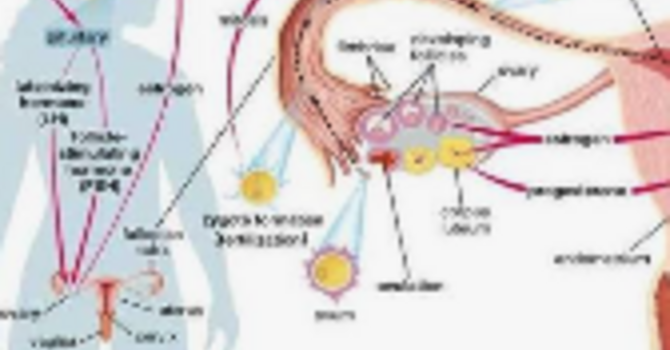
- "Postmenopause" is the medical term for everything after that point.[1] I do not love the term, because it implies menopause is something you get past. It is not. Your ovaries have stopped making estrogen, progesterone and most of their testosterone for good, and that is a permanent state your body lives in, not a phase that ends. Much of the confusion about how and when to treat women comes from this naming problem.
Women can now expect to spend more than a third of their lives after menopause, the decades when heart disease, bone loss, cognitive decline and metabolic disease emerge.[2] Menopause before 45 is called early menopause, and before 40, primary ovarian insufficiency. Those women face the same hormone loss years sooner and need long-term hormone replacement to protect their heart, bones and brain.[3]
The hormonal changes start earlier than most women are told. A 2026 study of more than 300 million lab tests found estradiol begins falling about 12 years before the final period, with an abrupt shift across dozens of body systems around the final period itself.[4] I explain how to recognize the early years in you are not losing your mind, you are in perimenopause.
How Long Do Hot Flashes Last?
Longer than most women are told. In the Study of Women's Health Across the Nation (SWAN), which followed more than 3,000 women, frequent hot flashes and night sweats lasted a median of 7.4 years in total and 4.5 years after the final period.[5] In the Penn Ovarian Aging Study, moderate to severe hot flashes lasted a median of 10.2 years.[6]
Who tends to have them longer:
- Women whose hot flashes start early, while periods are still regular or only slightly irregular: a median of more than 11 years in both studies[5][6]
- Black women: a median of 10.1 years in SWAN, the longest of any group[5]
- Women with more stress, anxiety or depressive symptoms when hot flashes begin[5]
In other words, if your hot flashes started in your early 40s, you are not doing anything wrong when they are still there at 52.
Menopause Is Not Just Hot Flashes
When people ask how long menopause lasts, they usually mean hot flashes. But estrogen, progesterone and testosterone act on nearly every tissue in your body, so the symptoms are far broader than most women are told. In my practice I see dozens of them, many that women never connect to their hormones:
- Joint pain, stiffness and frozen shoulder
- Tingling or ringing in the ears
- Burning mouth, mouth sores and dry mouth (I wrote about burning mouth syndrome separately)
- Sinus problems, dry eyes and new allergies
- Heart palpitations
- Itchy or crawling skin, thinning hair and brittle nails
- Brain fog, anxiety, rage and low mood
- Insomnia and 3 a.m. waking
- Vaginal dryness, painful sex and urinary urgency or infections
- Weight gain around the middle and muscle loss
Because these symptoms are so varied, women often see an orthopedist, an ENT, a dentist and a psychiatrist before anyone mentions hormones. Each of these symptoms can last as long as the hormone loss does, which for many women means years, and for some, for life.
What Fades And What Does Not
Usually improves with time:
- Hot flashes and night sweats, eventually, for most women, though it can take a decade
- Brain fog. The memory and processing changes of perimenopause tend to recover after menopause[7]
Does not go away on its own:
- Vaginal dryness, painful sex and bladder symptoms. This genitourinary syndrome of menopause affects an estimated 27% to 84% of postmenopausal women, is progressive, and is underdiagnosed and undertreated[8]
- Bone loss. In SWAN, bone loss began a year before the final period and was fastest from one year before to two years after it. Women lost 10.6% of spine bone density over ten years, 7.4% of it in that three-year window, and the loss slowed but did not stop[9]
- Heart, metabolic and muscle changes, which continue after the final period[4]
A 2024 review of five decades of research concluded that estrogen loss affects almost every organ system: urinary and reproductive tissue, heart and blood vessels, brain and mood, bone, skin, immunity and digestion.[10]
This is the part of menopause no one talks about. The hot flashes are the loudest symptom, but the permanent loss of estrogen, progesterone and testosterone is what shapes your bones, heart, brain and pelvic health for the rest of your life. I cover bone in your bones are losing ground every year after 40.
You Do Not Have To Wait It Out
Many women with significant symptoms are never treated, a gap that leading menopause experts have called a clinical care system that has gone off track.[11]
Hormone therapy is the most effective treatment for hot flashes and night sweats and the most effective treatment for vaginal and bladder symptoms, and it prevents bone loss and fractures.[12] ACOG's 2026 guideline gives it a strong recommendation for hot flashes and the sleep problems they cause.[13] And there is no arbitrary age at which you must stop; the Menopause Society says the decision should be individualized.[12]
In my practice I use personalized bioidentical hormones, adjusted to how you feel, and I treat menopause as a long-term health transition rather than a few bad years to survive. You can read more in everything you need to know about bioidentical hormone therapy and, if sleep is your biggest struggle, why you cannot sleep anymore.
Frequently Asked Questions
How long does menopause last? Officially, menopause is one day, twelve months after your last period. In reality your ovaries do not restart, so the hormone loss lasts the rest of your life. Perimenopause before it usually lasts four to eight years, and hot flashes last a median of 7 to 10 years in total.
Can menopause symptoms last 10 years or more? Yes. Women whose hot flashes start early in the transition have them for a median of more than 11 years.
Do symptoms ever stop? For many women, hot flashes fade over time, but some have them for the rest of their lives. Vaginal dryness, bladder symptoms and bone loss do not resolve on their own, because the hormones that protected those tissues are not coming back.
Is it ever too late to treat symptoms? No. Age alone does not rule out treatment; it changes how we start and which route and dose make sense.
If you are years into symptoms and tired of being told to wait it out, book a complimentary discovery call at doctoranat.com. No pressure, no commitment.
Book your complimentary discovery call at doctoranat.com
Dr. Anat Sapan is a board-certified OB-GYN and menopause specialist, exclusively focused on personalized bioidentical hormone therapy for women in their 40s, 50s, 60s, and beyond. She serves patients via telemedicine in California, Florida, New York, and Illinois. She has been quoted on this topic in Prevention.
References
- Harlow SD, et al. Executive summary of the Stages of Reproductive Aging Workshop + 10. J Clin Endocrinol Metab. 2012;97(4):1159-68. PubMed
- Lobo RA, et al. Prevention of diseases after menopause. Climacteric. 2014;17(5):540-56. PubMed
- Sullivan SD, Sarrel PM, Nelson LM. Hormone replacement therapy in young women with primary ovarian insufficiency and early menopause. Fertil Steril. 2016;106(7):1588-1599. PubMed
- Pridham G, et al. Population-scale reconstruction of menopause dynamics reveals a physiological cliff at the final menstrual period. Nat Med. 2026. Nature Medicine
- Avis NE, et al. Duration of menopausal vasomotor symptoms over the menopause transition. JAMA Intern Med. 2015;175(4):531-9. PubMed
- Freeman EW, et al. Duration of menopausal hot flushes and associated risk factors. Obstet Gynecol. 2011;117(5):1095-1104. PubMed
- Greendale GA, et al. Effects of the menopause transition and hormone use on cognitive performance in midlife women. Neurology. 2009;72(21):1850-7. PubMed
- The 2020 genitourinary syndrome of menopause position statement of The North American Menopause Society. Menopause. 2020;27(9):976-992. PubMed
- Greendale GA, et al. Bone mineral density loss in relation to the final menstrual period in a multiethnic cohort: results from SWAN. J Bone Miner Res. 2012;27(1):111-8. PubMed
- Yang JL, et al. Estrogen deficiency in the menopause and the role of hormone therapy: integrating the findings of basic science research with clinical trials. Menopause. 2024;31(10):926-939. PubMed
- Manson JE, Kaunitz AM. Menopause management: getting clinical care back on track. N Engl J Med. 2016;374(9):803-6. PubMed
- The 2022 hormone therapy position statement of The North American Menopause Society. Menopause. 2022;29(7):767-794. PubMed
- American College of Obstetricians and Gynecologists. Management of menopause-related vasomotor, sleep, and mood symptoms. Clinical Practice Guideline No. 13. Obstet Gynecol. 2026;148(5):e345-e369. Summary

Anat Sapan MD
Contact Me